

Ask most contractors how steep a paved surface should pitch and you’ll hear the same number: a quarter inch of fall per foot, aimed toward a gutter, a swale, or the street. That figure is drilled into anyone who has poured concrete or laid asphalt, and it is correct for those materials. The trouble starts when the same reflex gets applied to a permeable paver system, where the whole point is that water should not be shoved somewhere else.
I’ve walked onto jobs where a permeable driveway was graded like a parking lot, and the result is almost always the same disappointment: puddling at the low edge, a saturated strip along the border, and an owner convinced the pavers “don’t work.” They work fine. The slope was fighting them the entire time.
Where Conventional Grading Logic Comes From
Impervious surfaces have exactly one way to shed water: across the top. Nothing soaks in, so every drop has to travel to an edge and leave. Pitch is the only tool you have, and steeper pitch moves water faster. Decades of concrete and asphalt practice turned that into a rule of thumb that nobody questions. The logic is sound, but it is built on the assumption that the surface is a lid.
A Permeable Surface Drains Down, Not Away
A permeable system is not a lid. The joints between pavers, the open-graded bedding, and the stone base beneath are all designed to take water vertically, into the ground or into a storage reservoir, rather than carrying it to a perimeter. The primary flow direction is down, not across. That single fact rewrites the grading plan. You are no longer racing water to an edge; you are giving it time and space to disappear through the surface it is sitting on.
Overpitching Against Your Own Base
Here is the failure I see most. When a permeable surface is pitched at the full conventional slope, water hits the pavers and runs downhill along the top before it has a chance to infiltrate. It pools at the low side, overwhelms the joints there, and leaves the upper two-thirds of the base barely used. You built an expensive stone reservoir and then engineered the water to skip most of it. A gentle slope, often far less than a quarter inch per foot, lets water enter across the whole field instead of sheeting to one line.
The Overflow Path Everyone Forgets
Draining down does not mean you ignore the sky entirely. Every permeable installation needs a defined path for the day the storage fills faster than it empties, usually a slow, broad overland route that activates only in extreme rain. This is not the same as the primary pitch, and conflating the two is where plans go wrong. A well-designed system handles the ordinary rain through infiltration and keeps a modest surface slope as the backup, not the main act. When a saturated surface does need a seasonal cleaning to restore flow, firms that handle exterior surface care such as https://www.northcolumbuscleaning.com/ can clear the joints so infiltration recovers before the overflow path is ever stressed.
Clay Subgrade Changes the Math
Soil decides how much you can lean on infiltration. Sandy ground drinks water quickly and forgives a nearly flat grade. Heavy clay, common across much of central Ohio, drains slowly, which means the reservoir has to hold more and release it over a longer window. On clay you size the stone base deeper, sometimes add an underdrain, and accept that a little more surface slope and a reliable overflow route matter more than they would over fast-draining soil. Plugging the conventional slope number into clay without adjusting the base is how good pavers end up sitting in a bathtub.
Grading It the Way It Was Meant to Work
The fix is rarely dramatic. It is a flatter, more even surface, a base sized to the soil underneath, and an honest overflow plan kept separate from everyday drainage. Done that way, the pavers finally do what they were bought to do.
- Pitch permeable surfaces far gentler than concrete or asphalt.
- Let water infiltrate across the whole field, not run to one edge.
- Design the overflow route separately from the primary grade.
- Size the stone base to your soil, not to a generic rule.
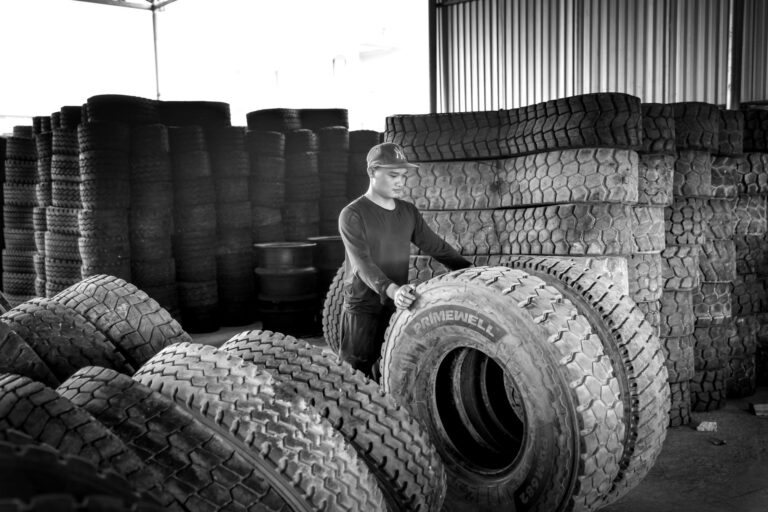
A string like 11R22.5 148/145L stamped into the rubber tells you almost everything you need to replace a heavy truck tire correctly. The trouble is that most drivers glance past it, order whatever the last tire was, and hope it matches. Each character in that sequence carries a separate meaning, and getting one wrong can mean a tire that rubs the frame, carries too little weight, or wears out months early.
What Sidewall Codes Mean
Take a common size such as 11R22.5. The first number, 11, is the nominal section width in inches for this older measurement style. On metric-sized tires you will instead see a three-digit millimeter width followed by an aspect ratio, like 295/75R22.5, where 75 means the sidewall height is 75 percent of the tread width. The letter R confirms radial construction, which is standard on almost every modern highway truck tire. The final number, 22.5, is the rim diameter in inches the tire is built to fit.
Beyond the size block you will find a maze of smaller stamps: the DOT code with the manufacturing date in its last four digits, the tread wear and traction grades on some tires, the maximum inflation pressure, and the ply or construction rating. Reading them in order keeps you from mixing up width and diameter, a mistake that leads to tires that physically will not mount.
Reading Load Ratings
The pair of numbers after the size, such as 148/145, is the load index, and it is where many buyers get caught. On a dual-capable tire the first figure is the load index for single application and the second for dual application, because a tire mounted in a dual set carries less per tire than one running alone. Each index number corresponds to a specific weight in a published chart; 148 translates to roughly 3,000 kilograms per tire in single use. The letter at the end, the L in 148/145L, is the speed symbol, telling you the maximum rated speed for that load.
Matching the load index to your axle weights matters more than matching the brand. A tire that fits the rim perfectly but carries too little weight will run hot and fail under a loaded trailer. Before ordering a set, suppliers such as Pneus Québec will cross-check the load index against the position you are fitting, since a steer tire, a drive tire, and a trailer tire often need different ratings even when the size is identical. For operators running mixed loads across Quebec’s long highway routes, that single check prevents the most expensive kind of guesswork.
Keep the inflation pressure stamped on the sidewall in mind too. The maximum pressure listed is the figure at which the tire achieves its full rated load. Running below it does not just soften the ride; it lowers the weight the tire can safely carry, which effectively cancels out the load index you paid for.
Where Markings Mislead
The biggest trap is assuming the sidewall describes the tire’s current condition. The DOT date code tells you when the tire was built, not when it was sold or installed, so a tire that looks new may have spent years in a warehouse. Rubber ages whether or not it turns, and a date more than a few years back is worth questioning.
Section width is another soft number. The stamped width is measured on a specified reference rim, and mounting the same tire on a wider or narrower wheel changes its actual footprint. Two tires marked the same size can sit differently on your equipment depending on the rim beneath them.
Finally, remember that a matching size does not guarantee a matching tire. Tread pattern, casing design, and position-specific engineering are not fully captured in the sidewall code, which is why a steer-position tire and a trailer tire can share 11R22.5 and behave nothing alike on the road.
The next time you are near a parked truck, crouch beside one tire and read its sidewall from left to right until every stamp makes sense; once you can decode one, matching your next replacement becomes a two-minute job instead of a gamble.

Most cash offers on a house come from the same basic formula, and once you see the pieces, the number stops feeling arbitrary. A buyer starts with what the home would be worth fully fixed up, subtracts the cost of fixing it, subtracts their intended profit and selling costs, and the remainder is what they can pay you today. There is no magic to it. The variables just change from house to house.
The After-Repair Value
The starting point is the after-repair value, usually shortened to ARV. This is the price your house would realistically sell for on the open market after all repairs and updates are done, not what it would fetch in its current condition. A buyer figures this out by looking at recent sales of comparable homes nearby — same general size, age, layout, and neighborhood — that have already been renovated and sold.
In McHenry, that means pulling sold prices from your specific area rather than a countywide average, because a few blocks can change the number noticeably. If updated three-bedroom homes on streets like yours have been closing around a certain figure, that becomes the ARV. The ARV is not a promise of what you will get. It is the ceiling the whole calculation works down from, so an honest buyer will keep it grounded in real comparable sales instead of inflating it to make the rest of the math look better.
Subtracting Repair Costs
Once the ARV is set, the buyer estimates what it will cost to bring the house to that resale condition. This covers the obvious items — roof, HVAC, flooring, kitchen, bathrooms — and the quieter ones like outdated wiring, foundation issues, or water damage that only show up on a walkthrough. Cosmetic work is cheaper than structural work, which is why two houses with the same ARV can produce very different offers. A home that needs paint and carpet is in a different category from one that needs a new furnace and a rebuilt bathroom.
Reputable local buyers such as We Buy Houses McHenry will walk the property or review photos and details before committing to a repair figure, because guessing too low hurts them and guessing too high hurts you. When you understand this part of the formula, it is easier to see why a buyer might point out a cracked foundation or an aging roof — those are line items that come straight off the top, not negotiating theater. If you have paperwork on recent repairs or replacements, sharing it can trim the estimate in your favor.
Where Your Offer Lands
After the ARV and the repair costs, two more pieces come out: the buyer’s holding and selling costs, and their profit margin. Holding costs are the taxes, insurance, utilities, and loan interest they pay while they own and renovate the house. Selling costs are the commissions and fees they will face when they resell it. The profit margin is what keeps them in business; it is typically a percentage of the ARV rather than a random markup.
Put together, a simplified version looks like this: ARV minus repairs minus holding and selling costs minus profit equals your offer. That is why a cash number is lower than full market value — you are trading some price for speed, certainty, and skipping the repairs, showings, and commissions yourself. For a seller facing a tight timeline, an inherited property, or a house that would not pass a traditional inspection, that trade can be worth it. The key is knowing the offer reflects real costs and not a lowball pulled from nowhere.
The practical next step is to ask any buyer to show you the breakdown — their estimated ARV, the repair figure, and the deductions — and compare it against recent sales in your part of McHenry. A buyer who can walk you through the math line by line is one worth taking seriously.
Luxury vinyl plank collections offer an exceptional combination of aesthetics, durability, and practicality, making them an ideal choice for homeowners seeking a stylish flooring solution. These collections are designed to replicate the look of natural materials like hardwood while providing the benefits of vinyl, such as resistance to moisture and easy maintenance. Whether you’re renovating your home or building a new one, exploring luxury vinyl plank options can enhance your space dramatically. One of the standout features of luxury vinyl plank collections is their stunning variety of designs.
From rustic oak to sleek maple, the wide range of colors and textures available allows you to find the perfect match for your interior decor. Advanced printing technology ensures that each plank captures the nuances of real wood, including grain patterns and knots, giving your floors an authentic look. This versatility makes LVP suitable for various styles, from contemporary to traditional.
Durability is another key benefit of luxury vinyl plank flooring. Designed to withstand heavy foot traffic, LVP is highly resistant to scratches, dents, and stains, making it an excellent choice for busy households. Additionally, many collections feature a waterproof core, which is perfect for areas prone to moisture, such as kitchens and bathrooms. This durability not only prolongs the lifespan of your flooring but also makes it a practical option for families with children and pets.
Installation of luxury vinyl plank is generally straightforward, with many collections featuring a click-lock system that allows for easy DIY installation. This user-friendly approach can save you time and money, enabling you to transform your space quickly. For those who prefer professional installation, LVP is often easier and less labor-intensive than other flooring materials, ensuring a smooth process.
Maintenance is a breeze with luxury vinyl plank collections. Regular cleaning typically involves sweeping or vacuuming, followed by occasional damp mopping. Unlike hardwood floors, LVP doesn’t require refinishing or special treatments, making it an ideal low-maintenance option for busy lifestyles. This ease of care is one of the primary reasons homeowners choose luxury vinyl plank for their spaces.
Many luxury vinyl plank collections also focus on sustainability, with some manufacturers producing eco-friendly options made from recycled materials and free from harmful chemicals. Choosing these products not only benefits your home but also contributes to a healthier environment.
In conclusion, luxury vinyl plank collections provide a perfect blend of style, durability, and practicality for any home. With a vast array of designs to choose from, homeowners can easily find the ideal flooring solution to enhance their space. Whether you’re looking for a rustic wood finish or a sleek modern aesthetic, luxury vinyl plank flooring can elevate your home’s interior while offering long-lasting performance. If you’re considering new flooring, explore the impressive luxury vinyl plank collections available to find the perfect fit for your lifestyle and design preferences.
When banners speak about VODs, they refer to previous broadcasts that can be accessed again. To download a twitch vod, they can use tools available on the internet site with a web browser or an app like 4K Video Downloader Plus.
For developers, this is essential due to the fact that it allows them to maintain their highlights for long after the stream has finished. It can also help them conserve data and make use of less bandwidth.
How to download a Twitch VOD on a Mac
If you’re a banner on Twitch, you most likely want to tape-record your finest performances and share them with others. Nonetheless, the procedure of downloading VODs can be complicated and lengthy. Thankfully, there are a number of services that can aid you do the job faster and much more effectively.
One option is to utilize a complimentary third-party program called Twitch Leecher. This program enables you to download and install any type of Twitch VOD that is made by one more user on the system. To begin, open up the video that you want to download and install and copy its link. Then, paste the web link into the program and click the “Download and install” button.
Another alternative is to utilize a free online device called SnapDownloader. This program can download any kind of VOD that is not a live stream and wait in the style of your option. To start the process, open up a video clip on Twitch and duplicate its link. After that, paste the link into SnapDownloader and select a video quality and outcome style.
Just how to download a Twitch VOD on a Windows
VOD is an attribute on Twitch that allows streamers archive their content from previous programs. This allows audiences to enjoy the broadcast long after it ends and likewise lets streamers generate emphasize video clips for their streams. This attribute is essential for many banners, as it aids them grow their target market and boost involvement on their networks.
Nonetheless, there is a problem with the VOD attribute: it only stores your broadcasts for a limited time. If you wish to maintain your VODs longer, you require to utilize a third-party software application to download them.
To do this, you require to open a Twitch site or application and copy the URL. Next, paste the link into SnapDownloader and choose the video clip top quality you intend to save it as. Then, click the Download and install button to begin downloading and install the VOD to your computer system. You can likewise utilize this tool to download and install Twitch highlights and past broadcasts. However, it is necessary to keep in mind that a few of these programs may include spyware and adware, so you need to just utilize them with caution.
How to download a Twitch VOD on a Chromebook
Whether you’re a banner or merely a Twitch customer, having the ability to download and install VODs is a terrific means to maintain your preferred highlights and past programs. Nonetheless, it can be challenging to locate the very best method for doing so.
One means to do this is by utilizing a third-party app. A number of these applications, such as Twitch Leecher and 4K Video Downloader, allow you to download and install a complete Twitch VOD in simply a couple of steps.
An additional option is to make use of the VOD feature on Twitch’s site. This can be done by visiting to your account on computer, and after that going to your account web page and picking “Video clip Manufacturer.” From there, you can pick the VOD you would like to download and install. The VOD will certainly after that be conserved to your computer.
Exactly how to download a Twitch VOD on a Firefox web browser
Jerk VODs permit streamers to conserve past programs for visitors to enjoy on demand. It is a wonderful way to expand your channel and maintain your audience involved also when you are not reside on the stream.
While it is possible to download from the main Twitch internet site, this approach needs a secure Internet connection and sufficient room on your gadget. It additionally relies upon the number of added tools connected to your computer system and the background running programs, which can affect downloading and install rate.
A better choice is making use of a third-party device to download and install Twitch VODs, such as 4Vid Video Clip Downloader. This cost-free program is readily available for Windows, Mac, and Linux and supports multiple sites, including YouTube, Twitter, Facebook, Instagram, and Twitch. It can also download HD videos, which are not sustained by the official Twitch website. It is simple to make use of and supports a selection of styles.
Eastern Europe, a region steeped in history and cultural richness, is home to a diverse tapestry of women who embody resilience, ambition, and a deep connection to their heritage. From the vibrant streets of Warsaw to the picturesque villages of Slovenia, Eastern European women navigate a complex landscape shaped by tradition, geopolitical shifts, and the pursuit of modern aspirations. This article explores the multifaceted identities of Eastern European women, highlighting their roles in society, challenges they face, and the evolving narratives of gender dynamics in the region.
Cultural Heritage and Diversity
Eastern Europe is characterized by its rich cultural heritage, influenced by centuries of interactions between Slavic, Baltic, Balkan, and other ethnic groups. Women from this region often carry a strong sense of cultural identity, shaped by traditions, language, folklore, and religious practices unique to their communities. While diversity is celebrated, common threads such as hospitality, familial bonds, and respect for elders weave through the fabric of Eastern European societies.
Traditional arts and crafts, including embroidery, pottery, and folk music, serve as expressions of cultural identity and communal pride. Many women actively participate in preserving these traditions, passing down skills and stories to future generations amidst the backdrop of modernization and globalization.
Education and Professional Advancement
Education has been a transformative force for Eastern European women, providing opportunities for personal growth and professional achievement. Throughout history, access to education has empowered women to pursue careers in fields ranging from STEM (Science, Technology, Engineering, and Mathematics) to humanities, politics, and entrepreneurship.
Despite progress, challenges such as gender bias, wage disparities, and limited representation in leadership roles persist. Women across Eastern Europe continue to advocate for gender equality in the workplace, pushing for policies that promote equal opportunities and support for women in traditionally male-dominated fields.
Beauty Standards and Cultural Expressions
Eastern European women are often celebrated for their diverse and distinctive beauty. From the fair-skinned Slavic features of Russia and Ukraine to the olive-skinned elegance of women from the Balkans, beauty standards vary across the region. Fashion and personal style reflect a blend of traditional attire and contemporary trends, with vibrant colors, intricate patterns, and handmade accessories showcasing cultural pride and individual expression.
Cultural expressions extend beyond fashion to include literature, cinema, visual arts, and performing arts. Women contribute to these fields as writers, filmmakers, artists, and performers, enriching Eastern Europe’s cultural landscape with their creativity and unique perspectives.
Family Dynamics and Social Roles
Family plays a central role in the lives of many Eastern European women, shaping their values, priorities, and social interactions. Multi-generational households and strong kinship ties are common, fostering a sense of community and collective responsibility. Women often take on caregiving roles for children, elderly relatives, and extended family members, balancing these responsibilities with professional pursuits and personal aspirations.
In recent decades, changing societal norms have influenced family dynamics, including attitudes towards marriage, divorce, and parenting. While traditional values of loyalty and commitment endure, women are increasingly empowered to make choices that align with their individual goals and aspirations.
Challenges and Resilience
Eastern European women have confronted numerous challenges throughout history, including political upheavals, economic transitions, and social inequalities. The legacies of communism and post-conflict reconstruction have shaped their experiences and contributed to disparities in areas such as healthcare, education, and employment opportunities.
Despite these challenges, Eastern European women have demonstrated resilience and perseverance in advocating for their rights and advancing social change. Women-led initiatives and grassroots movements have emerged to address issues such as gender-based violence, reproductive rights, and environmental sustainability, highlighting the role of women as catalysts for positive transformation in their communities.
Conclusion
Eastern European women embody a complex blend of tradition, resilience, and aspiration in a region shaped by historical legacies and contemporary challenges. They navigate a dynamic landscape where cultural heritage intersects with modernity, influencing their identities, roles in society, and contributions to global discourse.
As Eastern Europe continues to evolve, so too do the opportunities and challenges facing its women. Celebrating their diversity, achievements, and contributions is essential to fostering inclusive societies where women are empowered to thrive, innovate, and lead in every aspect of life.
In embracing the multifaceted identities of Eastern European women, we honor their heritage, amplify their voices, and support their ongoing journey towards equality, justice, and dignity in a rapidly changing world.
Eastern Europe, a region rich in history, culture, and diversity, is home to women who embody a fascinating blend of traditions, modernity, and resilience. From the bustling streets of Budapest to the serene landscapes of the Carpathian Mountains, Eastern European women have contributed significantly to the fabric of their societies and continue to shape their own narratives in a rapidly changing world. This article explores the multifaceted identities of Eastern European women, highlighting their strengths, challenges, and the vibrant tapestry of their lives.
Cultural Heritage and Identity
The cultural heritage of Eastern Europe is as diverse as its landscapes. From the Baltic states to the Balkans, each region within Eastern Europe boasts its own unique traditions, languages, and customs. Women from this region often carry a deep sense of pride in their cultural identity, which is rooted in centuries of history and shaped by interactions with neighboring cultures.
Traditional values such as hospitality, family solidarity, and respect for elders are paramount in many Eastern European societies. Women play a central role in preserving these values while also adapting to the modern complexities of urbanization, globalization, and shifting gender roles.
Education and Professional Achievement
Education has been a cornerstone of empowerment for Eastern European women. Throughout history, access to education has provided opportunities for women to pursue careers in diverse fields such as science, literature, politics, and the arts. Today, Eastern European women are prominent in academia, business, government, and the creative industries, contributing their expertise and innovation to local and global arenas.
While challenges such as gender stereotypes and workplace discrimination persist, many women in Eastern Europe are breaking barriers and advocating for gender equality. Initiatives promoting women’s leadership and entrepreneurship are gaining momentum, fostering a new generation of empowered female leaders who are reshaping their societies.
Beauty, Fashion, and Expression
The concept of beauty in Eastern Europe is as varied as its landscapes. From the fair-skinned Slavic beauties of Ukraine and Belarus to the Mediterranean allure of women from Croatia and Albania, Eastern European women encompass a spectrum of physical appearances and styles. Fashion in Eastern Europe reflects a blend of traditional attire and contemporary trends, with vibrant colors, intricate embroidery, and elegant designs often distinguishing regional dress.
Beyond aesthetics, Eastern European women express their identities through art, literature, music, and dance. Cultural festivals and celebrations showcase the rich artistic heritage of the region, providing platforms for women to express their creativity and preserve cultural traditions for future generations.
Family and Relationships
Family holds a cherished place in the hearts of many Eastern European women. Strong familial bonds, extended kinship networks, and celebrations of life milestones are integral aspects of social life. Women often play pivotal roles as caregivers, nurturers, and transmitters of cultural values within their families and communities.
In relationships, Eastern European women value loyalty, mutual respect, and emotional connection. While attitudes towards marriage and partnership have evolved, traditional values of commitment and support endure. Many women balance their professional ambitions with their roles as mothers, daughters, and partners, navigating the complexities of modern relationships with grace and resilience.
Challenges and Resilience
Eastern European women have faced numerous challenges throughout history, including political upheavals, economic transitions, and social transformations. The legacies of communism and the aftermath of conflicts have shaped their experiences and perspectives on resilience. Women have been at the forefront of social movements advocating for human rights, democracy, and gender equality, often risking their safety and well-being to secure a better future for their communities.
Despite progress in gender equality, disparities persist in areas such as access to healthcare, representation in leadership roles, and combating gender-based violence. Grassroots organizations and international partnerships are working to address these challenges, empowering women to assert their rights and amplify their voices on local, national, and global stages.
Conclusion
Eastern European women defy simplistic stereotypes, embodying a rich tapestry of identities, experiences, and aspirations. They are innovators, caretakers, activists, and cultural ambassadors who contribute to the dynamic mosaic of Eastern Europe’s societies. As the region continues to evolve, so too do the roles and opportunities available to women, shaping a future where diversity, equality, and human rights are central pillars of progress.
Celebrating the diversity and resilience of Eastern European women requires recognizing their achievements, acknowledging their challenges, and amplifying their voices in the ongoing pursuit of justice and equality. Their stories reflect the enduring spirit of a region that values heritage, embraces change, and empowers its women to lead with courage and compassion in every aspect of life.
Eastern Europe has long held a fascination for the rest of the world, not just for its rich history and cultural tapestry, but also for its women who are often portrayed as enigmatic and captivating. From the cobblestone streets of Prague to the bustling cities of Moscow and Kiev, Eastern European women carry with them a unique allure that has sparked curiosity and admiration. This article delves into the essence of Eastern European women, exploring their characteristics, cultural influences, and the myths that surround them.
Cultural and Historical Influences
The history of Eastern Europe has shaped the identities of its people, and women are no exception. Centuries of political turmoil, wars, and shifting borders have influenced the cultural mosaic of the region. From the majestic castles of Transylvania to the vibrant traditions of Russia, Eastern European cultures are steeped in a blend of Slavic, Baltic, and other influences.
Women from this region often embody a mix of traditional values and progressive outlooks. Family plays a central role in their lives, with strong ties to their roots and a deep respect for heritage. Yet, many Eastern European women are also highly educated and ambitious, balancing their roles as caretakers with successful careers in various fields.
Beauty and Elegance
One cannot discuss Eastern European women without touching upon perceptions of beauty. Often described as having a mysterious allure, these women are known for their striking features, including high cheekbones, captivating eyes, and slender figures. The stereotype of the “Eastern European beauty” has persisted in popular culture, portraying these women as glamorous and sophisticated.
However, it’s important to recognize that beauty is subjective and diverse across the region. From the fair-skinned beauties of Poland to the fiery personalities of Balkan women, Eastern Europe boasts a spectrum of physical appearances that defy a singular stereotype.
Strength and Resilience
Eastern European history is marked by resilience in the face of adversity. Women have played pivotal roles in shaping their countries’ destinies, from leading revolutions to preserving cultural heritage during times of upheaval. This legacy of strength is reflected in the modern Eastern European woman, who navigates challenges with grace and determination.
Whether it’s overcoming economic hardships or societal expectations, these women exhibit a tenacity that is both admirable and inspiring. Their experiences have forged a spirit of independence and self-reliance, traits that define their approach to life and relationships.
Love and Relationships
In matters of love and relationships, Eastern European women are often portrayed as passionate and devoted partners. Family values remain at the forefront of their priorities, with many seeking meaningful connections built on mutual respect and shared aspirations. Traditionally, courtship is seen as a serious endeavor, with an emphasis on commitment and loyalty.
While stereotypes may romanticize Eastern European women as submissive or seeking Western men for economic stability, the reality is far more complex. Like women everywhere, those from Eastern Europe seek love and fulfillment on their own terms, navigating the evolving dynamics of modern relationships while honoring cultural traditions.
Breaking Stereotypes
Despite the allure and mystique surrounding Eastern European women, it’s crucial to approach stereotypes with caution. The portrayal of these women as exotic or submissive can oversimplify their identities and perpetuate harmful misconceptions. Diversity within the region means that each woman’s story is unique, shaped by her personal experiences, aspirations, and values.
As Eastern Europe continues to evolve in a globalized world, so too do the perceptions and realities of its women. Many are embracing opportunities for education, entrepreneurship, and cultural exchange, challenging outdated notions and redefining what it means to be an Eastern European woman in the 21st century.
Conclusion
Eastern European women embody a rich tapestry of history, culture, and resilience. From their captivating beauty to their steadfast determination, they continue to intrigue and inspire people around the world. Beyond the stereotypes and myths, these women are individuals with diverse stories and aspirations, contributing to their communities and shaping the future of their countries.
As we celebrate the allure of Eastern European women, let us also recognize and appreciate their complexities and strengths. Their journey reflects a vibrant tapestry of traditions, values, and aspirations that defy singular definitions. In doing so, we honor their heritage and empower their voices in the ongoing narrative of Eastern Europe’s cultural legacy.